
When Social Categories Become Silos
Short · Miri Song on siloed categories, campus speech, and the need for productive disruption

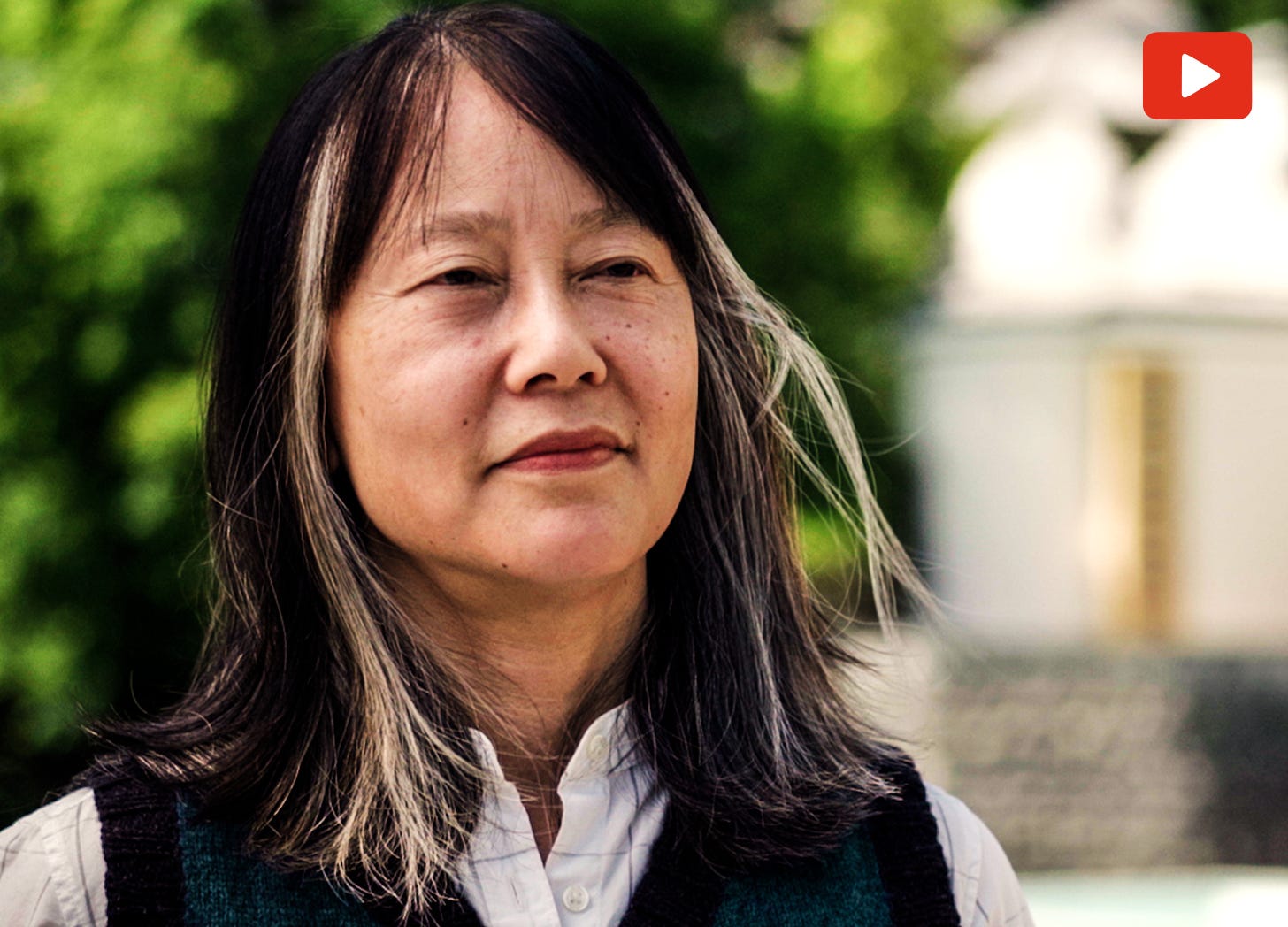
What happens when the categories meant to describe us begin to constrain us?
Sociologist Miri Song fears we are already living in a soft dystopia where people are siloed into categories of being that inhibit genuine exchange. Drawing on the Hypatia controversy and Rogers Brubaker's concept of "productive disruption," Song argues that the free exchange of ideas across group boundaries — especially uncomfortable, generative ones — is essential to any future worth imagining.
We asked:
“Can you imagine a dystopic or utopic future with regard to social difference?”
Song’s argument that categorization itself can become a prison connects to her full conversation in Episode 4 of the Futures of Difference podcast, where she explores the tension between recognition and rigidity in greater depth. Her emphasis on productive disruption offers an alternative to both uncritical identity politics and dismissive universalism.
About: Prof. Miri Song is a professor of Sociology at the University of Kent and Visiting Professor at the LSE, whose research focuses on ethnic identity, race and mixed race, racisms, and immigrant adaptation.
Full statement
Can you imagine a dystopic or utopic future with regard to social difference?
My worst imagined dystopia is one where our sense of selves in terms of the way in which we are categorized by others and the way that we categorize ourselves and categories are a fact of modern life. I fear that these categorizations will constrain our ability to truly interact and understand each other. Now, this isn’t an entirely imagined dystopia because I feel in some respect that we already inhabit to different degrees this level of dystopia because I think that we are already siloed into categories of being that inhibit our interactions and understandings with each other.
And this is particularly evident, I think, on university campuses where increasingly I feel that people are afraid to say what they really think or people feel that they cannot say what they think about another group because they are not seen as a member of the other group. And I think this is really unfortunate because there is nothing more valuable than to have the free exchange of ideas In a way that is really liberating and also really productive.
An example of this, I suppose, would be, I remember some years ago, there was a controversy in the feminist radical journal called Hypatia, where Rebecca Tuvel asked the question, if Caitlyn Jenner can be transgender, why can’t Rachel Dolezal claim that she, as a white woman, be black? Now, whether I agree with Tuvel’s analysis or not is beside the point.
The point is that I think it’s important that we are allowed to have these kinds of generative and controversial debates with each other and with our students. Just to finish off, I remember, Rogers Brubaker in 2017 wrote a really interesting piece in The New York Times about this particular issue. And he talked about the importance of being productively disruptive, kinds of ideas and categories to unsettle us from the way in which we are always thinking about being set in particular categories.
And I think this idea of being productively disruptive is really, really helpful too.
Futures of Difference is produced by Steven Vertovec at the Max Planck Institute for Political and Social Science (formerly the Max Planck Institute for the Study of Religious and Ethnic Diversity).