
The Democratic Drain Behind Failed Uprisings
Essay · Justin Gest on Why Authoritarian Regimes Outlast Popular Anger — and How Emigration Quietly Shrinks the Constituency for Democracy

What Happens to a Country When Its Democrats Leave?
Political scientist Justin Gest (George Mason University) argues that decades of emigration from authoritarian societies produce more than an economic “brain drain” — they produce a democratic drain. Emigrants tend, on average, to be more supportive of democratic institutions and liberal norms than the compatriots they leave behind; when they depart, they take their expectations of accountable government with them. Iran, which has lost as many as seven million people since the 1970s, is the vivid case: anger at the regime remains widespread, but the social base that popular uprisings require — organization, leadership, networks, trust — has been quietly shrinking for decades.
Essential points in this essay:
Emigrants worldwide — even those who are not politically active — tend to be more supportive of democratic institutions and liberal norms than those who stay; their exit changes the political composition of the societies they leave behind
Iran shows both forms of democratic drain: exiled dissidents who paid the price for open opposition, and millions of “demigrants” whose ordinary, individually rational departures collectively weaken the base on which democratic movements depend
Democratic drain helps explain authoritarian resilience from Iran to Hungary, Egypt, and Turkey — and it should change how policymakers think about diasporas, democracy assistance, and the unintended geopolitical effects of liberal democracies’ own attractiveness
About the author: Justin Gest is a professor at George Mason University’s Schar School of Policy and Government and the author of Democratic Drain: Global Migration and the Struggle for Democracy.
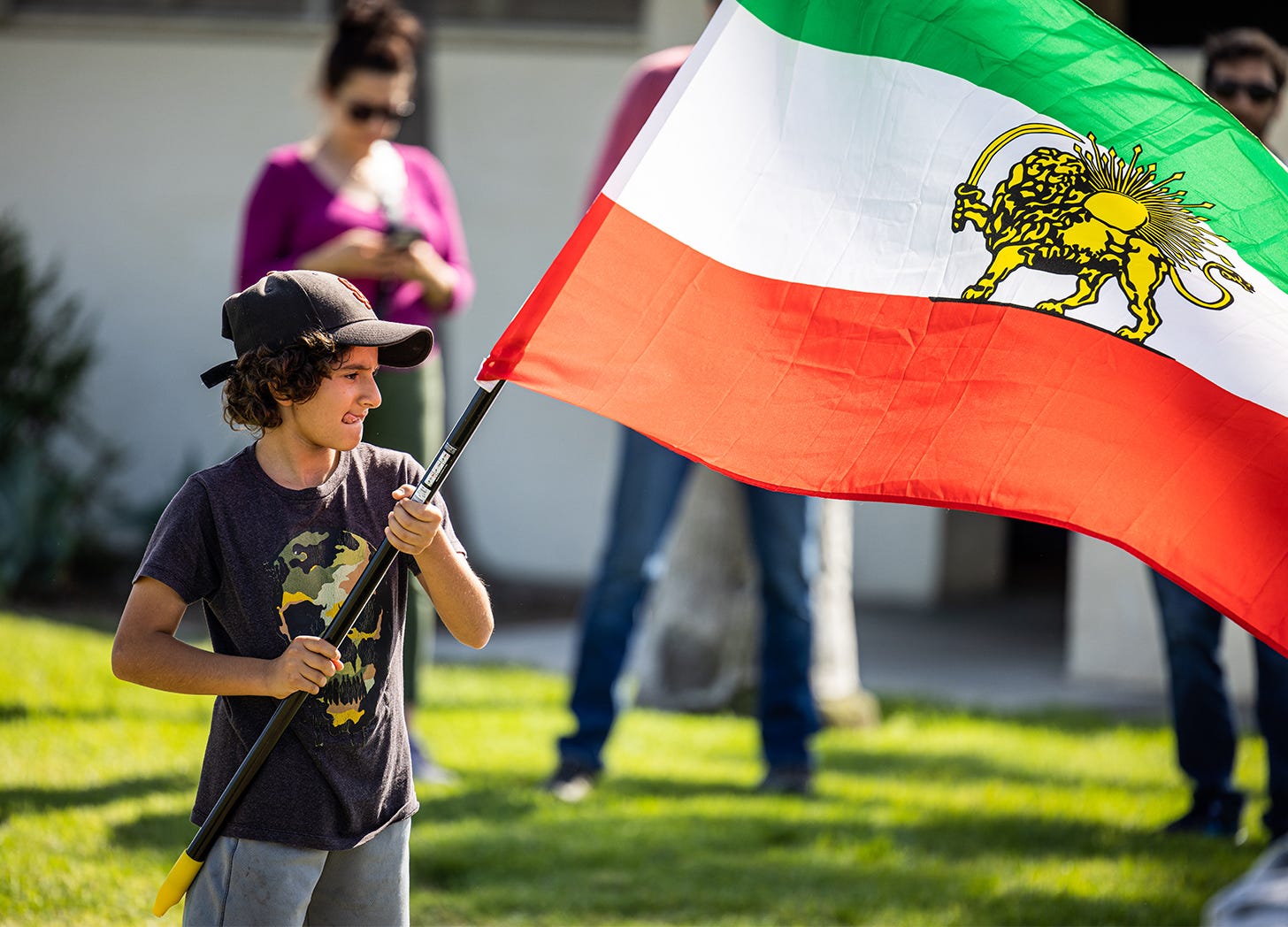
Recent debates about whether outside powers can foment popular uprisings in Iran illustrate a broader misunderstanding about authoritarian resilience. Foreign governments often imagine that, beneath an autocratic regime, there exists a latent democratic majority waiting for the right moment to rise. Sometimes there is. But in many societies, the citizens most likely to lead, organize, fund, and sustain democratic opposition have been leaving for decades.
Iran is a vivid example. Since the 1970s, it has experienced a steady outflow of as many as seven million people, with a plurality settling in the United States. The initial wave included hundreds of thousands of political opponents and members of the country’s Christian, Jewish, Baha’i, and Assyrian minorities fleeing repression. Later cohorts were more likely to be students, professionals, entrepreneurs, and family members seeking opportunity, stability, reunion with loved ones, or the freedom to build a life beyond sanctions and theocratic rule.
From Brain Drain to Democratic Drain
The departure of so many educated professionals and savvy business owners has long been understood as an economic loss — a classic case of “brain drain.” But migration can also produce a political loss.
According to my research, emigrants worldwide — even those who are not politically active — tend, on average, to be more supportive of democratic institutions and liberal norms than the compatriots they leave behind. When they depart, they take not only their skills, income, and enterprise. They also take their expectations of accountable government, political pluralism, free expression, minority rights, and constraints on arbitrary power — a “democratic drain.”
“They also take their expectations of accountable government, political pluralism, free expression, minority rights, and constraints on arbitrary power — a ‘democratic drain.”
Emigration is not random. The people most able and wanting to leave authoritarian or authoritarian-leaning societies are marginally younger, better educated, more internationally connected, more comfortable with risk, and more likely to imagine alternatives to the political order into which they were born. Those same characteristics are also associated with support for liberal-democratic norms. Some emigrants depart because of direct persecution. Others leave for jobs, education, love, or security. But even when their motives are not explicitly political, their exit can still change the political composition of the society they leave behind.
Iran’s diaspora reflects both forms of democratic drain. The country has lost dissidents who opposed the Islamic Republic openly and paid the price for doing so. And it has also lost millions of “demigrants”: people whose departures were voluntary, ordinary, and individually rational, yet collectively consequential. These are not necessarily activists. They are doctors, engineers, students, business owners, journalists, artists, and families who may never have joined an opposition party or led a protest. But many would have contributed to the social base on which democratic movements depend.
Why Grievance Is Not Democratic Capacity
That distinction matters. Popular uprisings require more than public anger. They require organization, trust, leadership, professional networks, resources, media capacity, and people willing to take extraordinary risks together. They also require a sufficiently large constituency that opposes the regime and also favors a more democratic alternative. Authoritarian governments understand this. Some repress opponents directly; others make life so constrained, stagnant, or humiliating that exit becomes the path of least resistance. Either way, the regime benefits when the people most inclined to challenge it build their futures elsewhere.
Even with millions of departures over the last few decades, many Iranians still plainly want a different government. Over the last decade, hundreds of thousands have risked their lives protesting corruption, clerical rule, gender repression, police violence, and economic mismanagement. The courage of those who remain should not be underestimated.
However, grievance is not the same as democratic capacity. Iran’s domestic opposition today is a patchwork of labor groups, ethnic minorities, women’s-rights activists, students, secular liberals, monarchists, and other currents long suppressed by powerful security institutions. The regime was built to survive pressure. It has multiple power centers, established lines of succession, and a Revolutionary Guard Corps reinforced by vast paramilitary networks. Against such a state, spontaneous anger is rarely enough.
The deeper problem is that many Iranians most inspired by the world’s democracies have had nearly half a century to depart for them, unless the regime forced them into exile first. Those who might otherwise have organized in Tehran, Isfahan, Shiraz, or Tabriz have built lives in Los Angeles, Toronto, London, Paris, Berlin, and Milan. From abroad, they may send money, advocate, publish, lobby, and keep alive an alternative vision of Iran. But diaspora politics rarely substitutes for domestic political organization. Distance weakens coordination. Exile divides movements. Host governments have their own priorities. And authoritarian regimes routinely portray expatriate opposition as foreign, detached, or treasonous.
Exit Became Easier Than Voice
Iran is hardly unique. Democratic drain helps explain why authoritarian or authoritarian-leaning governments can endure even in societies with educated populations, global connections, and large middle classes. After the Cold War, many analysts expected modernization, globalization, and mobility to strengthen democratic demands. In some places, they did. But mobility also gave democratically inclined citizens an alternative to staying and fighting. Exit became easier than voice.
In Europe, democratic drain may have facilitated authoritarian-leaning politics in countries such as Hungary, Poland, Serbia, and Turkey, all of which have sent large numbers of citizens to more liberal democracies after periods of political opening. In the Arab world, uprisings in Egypt and Tunisia deposed authoritarian leaders in 2011, only for democratic opposition forces to struggle to consolidate power afterward. In Libya, Syria, and Yemen, pro-democratic voices were overwhelmed by repression, factionalism, and civil conflict, while millions fled or resettled abroad.
This pattern complicates how we think about diaspora politics. Diasporas are often imagined as reservoirs of democratic energy: freer, wealthier, better connected, and able to advocate for change from abroad. Sometimes they are. Exiles can fund independent media, document abuses, lobby democratic governments, and sustain memories of political alternatives. But diaspora activism faces hard limits. Most emigrants are consumed by the demands of resettlement. Many disengage from homeland politics over time. Some support illiberal or sectarian causes from abroad. Others disagree profoundly about what should replace the regimes they oppose.
The result is a paradox. Liberal democracies benefit from receiving talented, ambitious, often democracy-leaning migrants from authoritarian societies. Their arrival can strengthen destination countries economically and culturally. Yet the same movement may weaken the democratic prospects of the societies they leave behind. The people most capable of renewing institutions at home are absorbed into institutions abroad.
What Democratic Drain Means for Policy
Still, we should not restrict migration in the name of democratization. People should not be trapped in dysfunctional or repressive states so that they can serve as raw material for someone else’s democratic hopes. Exit is often humane, rational, and necessary. Nor should emigrants be blamed for the authoritarianism that persists after they leave. The responsibility lies with regimes that repress, corrupt, intimidate, and fail their citizens.
Rather, democratic drain should change the way policymakers think about political development. Outside powers cannot assume that a suffering public is automatically a democratic public, or that a diaspora can simply be summoned to substitute for domestic organization. Democracy assistance should focus on exiled leaders and international advocacy, and also on the local networks that remain: unions, professional associations, women’s groups, student organizations, independent journalists, municipal reformers, and civic institutions capable of sustaining trust under pressure.
It should also make democratic states more humble about the consequences of their own attractiveness. By offering freedom, safety, education, and opportunity, they draw in precisely the people whom authoritarian societies can least afford to lose. That is one of liberal democracy’s great virtues. It is also one of its unintended geopolitical effects.
Democratic drain is not the whole story of authoritarian resilience. Institutions, repression, inequality, nationalism, foreign support, and elite manipulation all matter. But migration changes the social foundations on which democratic movements are built. Beyond labor and talent, it also distributes courage, expectations, civic habits, and political imagination.
“They assume that a democratic constituency remains intact, waiting for history’s cue. In many countries, that constituency has been quietly shrinking for years.”
That is why calls for uprisings so often disappoint. They assume that a democratic constituency remains intact, waiting for history’s cue. In many countries, that constituency has been quietly shrinking for years.
Justin Gest is a professor at George Mason University’s Schar School of Policy and Government, where he directs the Public Policy Program. He holds a PhD in government from the London School of Economics and a BA from Harvard University. He has authored seven books on the politics of migration, democracy, and demographic change, including his newest work, Democratic Drain: Global Migration and the Struggle for Democracy (Cambridge University Press, 2026).
Futures of Difference is produced by Steven Vertovec at the Max Planck Institute for Political and Social Science (formerly the Max Planck Institute for the Study of Religious and Ethnic Diversity).