
Mixity and How Social Categories Change
Podcast · featuring Miri Song on Mixed Identities, Assertion and Assignment, and Human Diversity

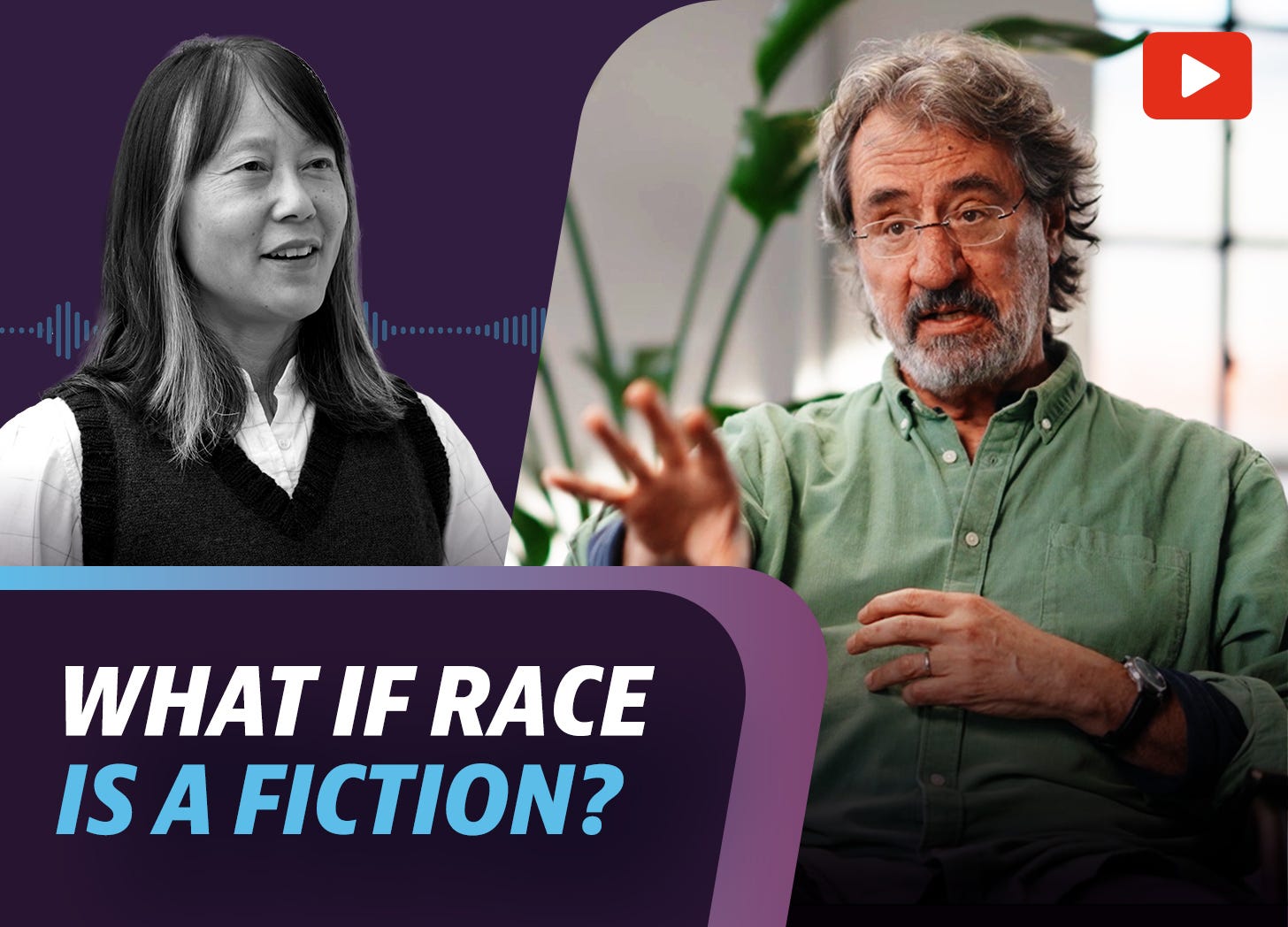
How are mixed identities changing social categories? In the 2020 US Census, “mixed” was the fastest-growing social category. In this episode, Miri Song (University of Kent / LSE) joins Steven Vertovec and Georg Diez to explore what mixity means for the future of human diversity.
Watch and listen to the episode:
🎧 Prefer audio only? Listen on Spotify or Apple Podcasts.
📝 Full transcript: Read the complete conversation →
Key Takeaways:
Mixity is not a singular new category — it opens up a multiplicity of experiences and identities
The dynamics of assertion (how we identify ourselves) and assignment (how others categorize us) are central to understanding social categories
The fiction of monoracial thinking persists despite growing recognition of mixed identities
The future of identity is complex and non-linear — there are many possible pathways, not one trajectory toward universal mixing
Cultural heritage, lived experiences, and family histories shape identity in ways that resist simplification
Social categories remain important for both emotional meaning and political recognition — the goal is not to dismiss them but to understand their full complexity
About the Guest:
Miri Song is Emeritus Professor at the University of Kent and at the London School of Economics. She is one of the world’s leading scholars on mixed identities and the dynamics of race and ethnicity.
Thank you for this thoughtful piece and for sharing the excellent podcast episode with Miri Song. The distinction between assertion (how we see and claim ourselves) and assignment (how others categorize us) is indeed powerful, especially in times when mixity is clearly the lived reality for so many.
As someone working with relational (meta)cognition, I see both assertion and assignment as deeply shaped by — and constantly influencing — the relational field around us. They are not isolated internal processes; they emerge, shift, and co-evolve in interaction with context, environment, and the people we relate to. When we bring in an assignment or assertion from a different domain (for example, applying a political, organizational, or technological lens to a personal or cultural identity), the dynamics become even more complex and sometimes conflicting.
This makes me wonder: if identity — whether mixed or otherwise — arises dynamically in the relational field, then holding on too tightly to any fixed category (even a “mixed” one) risks distorting the very fluidity and in-betweenness that mixity reveals. Embracing the messiness might mean staying open to this ongoing relational emergence rather than trying to freeze it into stable boxes.
Really enjoyed the conversation — it resonates strongly with questions of how we can support more regenerative ways of relating across differences. Looking forward to more episodes!