
How Does Migration Shape Identity?
Short · Brenda Yeoh on combining microscopic and telescopic lenses to understand migration

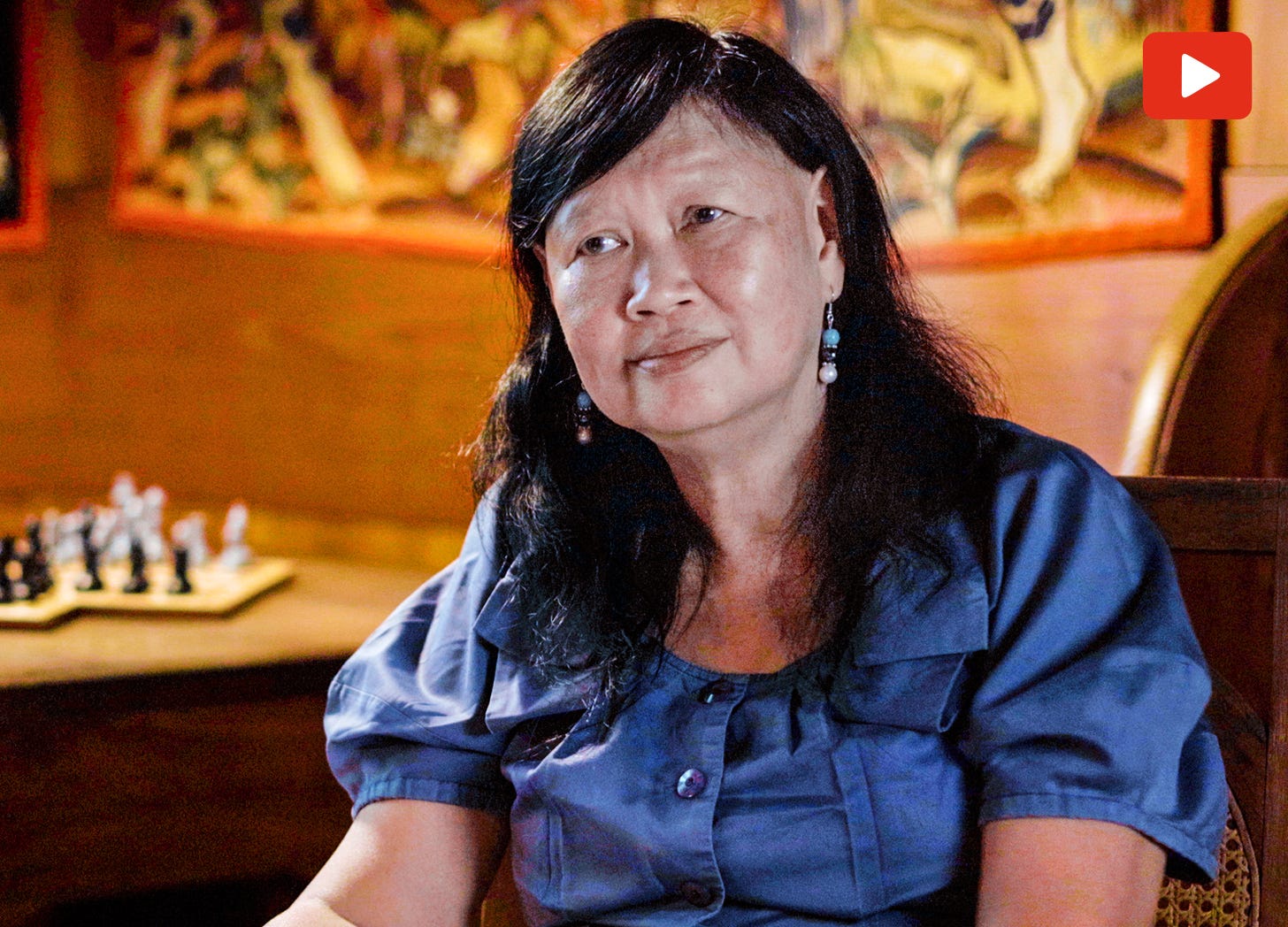
To find new ways of imagining the world, we need to look through two lenses at once.
Geographer Brenda Yeoh, drawing on Theodore Zeldin's intimate history of humanity, proposes a bifocal approach to migration and identity: one lens trained on the everyday details of migrant encounter across public and private spaces, the other surveying the large-scale temporalities of technological disruption, climate shocks, and demographic shifts. The result is an understanding of social difference that connects past, present, and future.
We asked:
“What is the most important thing to bear in mind when imagining or thinking about futures of social difference?”
Yeoh’s call for bifocal analysis resonates with the Futures of Difference platform’s commitment to bridging scales — from the intimate textures of lived experience to the structural forces reshaping societies worldwide. Her emphasis on making spaces into places of self-knowledge rather than fear echoes across the series.
About: Prof. Brenda Yeoh is a Raffles Professor of Social Sciences at the National University of Singapore and Research Leader of the Asian Migration Cluster at the Asia Research Institute. Winner of the 2021 Vautrin Lud Prize, her research focuses on migration, transnationalism, gender, and care migration in Asia.
Full statement
What is the most important thing to bear in mind when imagining or thinking about futures of social difference?
I take my cue from Theodore Zeldin’s intimate history of humanity, where he argues that to find new ways of imagining the world and thinking, we need to look through two lenses at the same time. One is through the microscope, observing the everyday details of life that’s close to people’s hearts. And secondly, to look at it through a telescope, which is to survey the large problems of this world at a distance.
So we need to combine these two lenses simultaneously. So from the microscopic perspective, we need to attend to the speciality of migrant encounter of every kind. We need to rethink the politics of diversity and migrant encounter across a range of public and private spaces. Whether it’s the conviviality of our streets, the civility of online spaces or the care dependencies of the home.
These need to be, I mean, I’m quoting Richard Sennett, places of self-knowledge, not fear. So that’s different micro perspective. So from the more telescopic kind of perspective, we need to attend to the coexistence of different temporalities of migration led diversification in societies. So this means taking into account the rapid changes of technological advances, the sudden shocks of climate change or conflict or disasters, as well as the slower shifts in demography, in migration infrastructure and in policy and migration regimes.
So such a bifocal lens encourages us to bring everyday spatial encounters on the ground in conversation with the longer term trends. This way of imagining the world allows us to build an understanding of social difference that connects past, present and future, and also in terms of what it means for different generations.
Futures of Difference is produced by Steven Vertovec at the Max Planck Institute for Political and Social Science (formerly the Max Planck Institute for the Study of Religious and Ethnic Diversity).