
Engaging the Interiority of Difference
Essay · John Borneman on Why Identity Is Not a Stable Inner Essence — and How the Self Holds Difference Within Itself

Does Identity Reveal an Authentic Inner Self — or Does It Flatten Us Into Categories?
Anthropologist John Borneman argues that identity is neither a stable inner essence nor a mere social label, but a historical construction that lives on the unstable border between inner life and public classification. Drawing on three decades of teaching at Cornell and Princeton, on Susan Faludi’s In the Darkroom, and on Donald Winnicott’s idea of the true self, he maintains that the conflictual differences inherent in the inner life tend to defy the recognizable categories of identity discourse.
Essential points in this essay:
Identity is not a stable inner essence but a historical construction — something that changes across time and can be consciously reshaped
The political language of identity often masks pressure to conform to socially recognized categories; we may, in other words, be fitting ourselves into reductive boxes
The challenge is to distinguish between identities that merely secure recognition and those expressions of self that arise from deeper processes of inner transformation
About the author: John Borneman is Emeritus Professor of Anthropology at Princeton University. His most recent book is I Was Married to a Horse, and Other Tales of an Accidental Anthropologist (2026, HAU Books, distributed by University of Chicago Press).
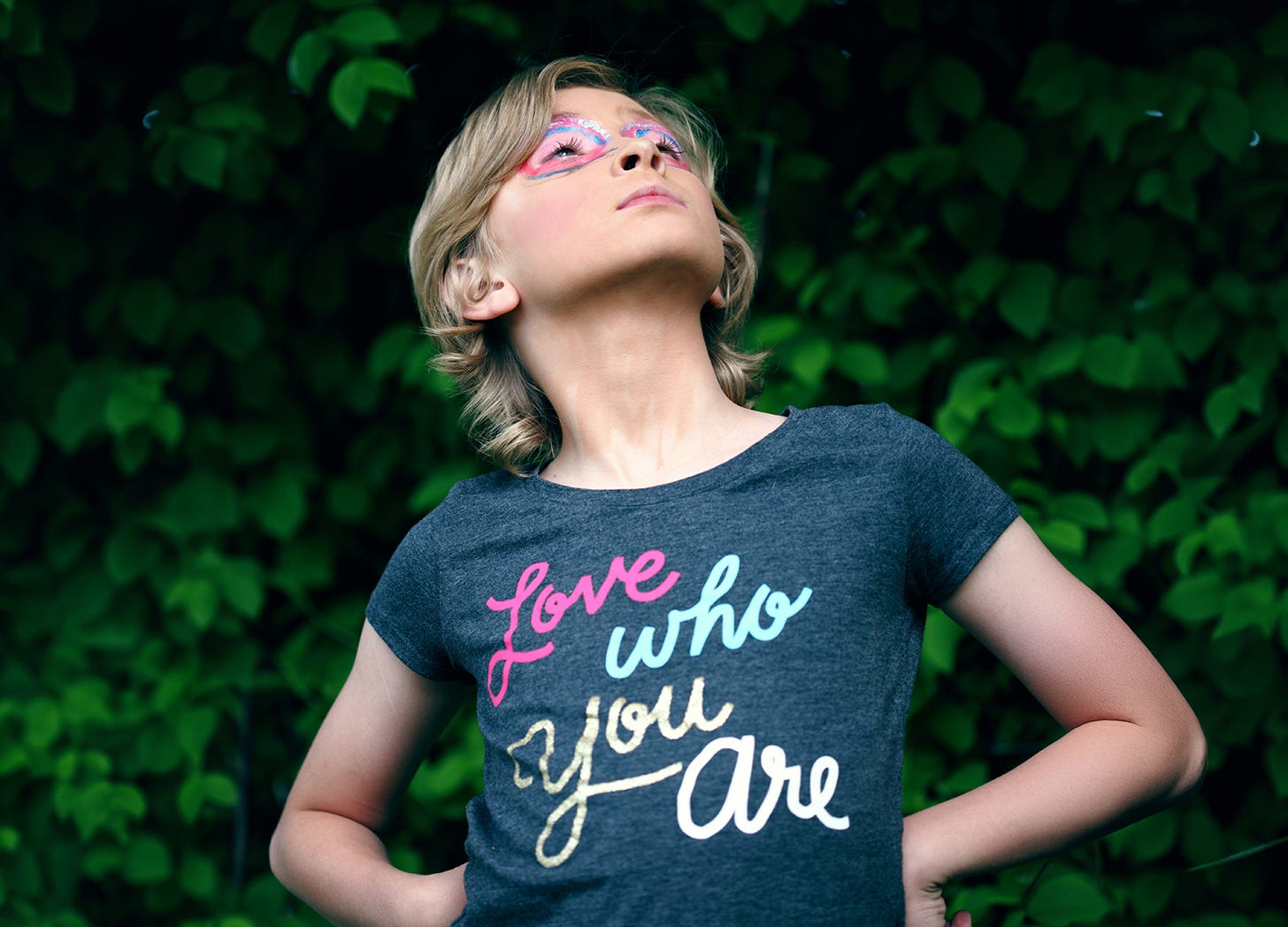
The Interiority of Identity
In my childhood in the second half of the twentieth century, the idea that every person possesses a stable inner essence became commonplace. This essence could be reduced to what we came to call an identity. In everyday life as well as in academic discourse, a broad consensus emerged in the Western world about what counted as identity and why it mattered. The most common categories were race, ethnicity, class, gender, religion, and sexuality.
Although the hierarchy among these categories varied, some — especially race and gender — were increasingly treated as fixed and immutable. Survey research, demography, and census-taking soon adopted them as standard measures reproducible across times and cultures. Universities and workplaces incorporated them into admissions and hiring under the banner of diversity. By the time I reached adolescence, individuals claiming religious or sexual identities were demanding not only tolerance but also public recognition.
But do these identities actually possess an interiority? And if they do, what is this identity and what is its status in the public sphere?
These questions have preoccupied me for decades. The political language of identity often assumes that identity reveals a person’s authentic inner self. Yet we must ask whether identity truly expresses the self or whether it sometimes merely reflects pressure to conform to socially recognized categories. Have we, in other words, fit our selves into reductive boxes?
“Have we, in other words, fit our selves into reductive boxes?”
Identity as a Historical Construction
When I began teaching a large introductory course at Cornell University in 1991 — titled Diversity and Contemporary Issues — I confronted these questions directly. Over two decades of teaching the course, first at Cornell and later at Princeton, I repeatedly revised the syllabus as contemporary debates evolved. Although I did not teach “identity politics” as such, I initially shared many of the assumptions common to my generation. Very soon, however, I began to distance myself from one of its central premises: the belief that identity corresponds to a stable inner essence that can be captured by a medical, psychological, or sociological category.
Instead, I came to see identity as a historical construction — something that changes across time and can also be consciously reshaped. At the same time, I recognized the deeply human desire for differentiation and belonging: the creation of distinct cultures and communities that foster creativity as well as attachment to a group.
Faludi and the Trouble with Authenticity
This tension between identity as a public category and the self as an inner process has recently been explored by Susan Faludi in In the Darkroom. Tracing the history of her father’s life and gender transition from male to female, Faludi shows how modern ideas of identity emerged partly from postwar medical and psychological discourse, which framed identity as an inner truth that experts could diagnose and reveal. Yet her narrative also suggests something more unstable: identity is shaped not only by interior feeling but also by historical upheavals, political pressures, and the stories societies tell about authenticity.
Contemporary debates about transgender identity bring this tension between inner experience and public classification into especially sharp focus. A very small number of individuals experience a profound disjunction between their felt gender identity and the social classification assigned to them on the basis of their bodies, particularly their secondary sexual characteristics. For those who experience gender dysphoria, the body itself becomes the site of conflict between inner experience and public classification. Medical transition — through hormones or surgery — can be understood in part as an effort to bring the external body into closer alignment with an internalized image of the self and to make that inner conviction legible to others.
Yet, as Faludi’s account of her father suggests, the internal image cannot be fully realized through the transformation of the physical body alone. The intensity of current political attacks on transgender people reveals how threatening such acts of self-transformation appear within social systems that rely on stable gender classifications. At the same time, the phenomenon also illustrates something more general about the interior life: the identities we claim are more than expressions of inner truth or products of external labeling. They are fragile attempts — often costly ones — to negotiate the gap between the two. Seen from this perspective, transgender experience does not merely confirm the idea of a stable inner identity; it dramatizes the difficulty of aligning inner experience, bodily form, and social recognition.
Winnicott and the True Self
The psychoanalyst Donald Winnicott helps clarify this tension. Winnicott proposed the idea of a true self: a sense of authenticity that is not simply the result of complying with social expectations — initially those of the mother. Yet the term true self is somewhat misleading. For Winnicott, it is neither innate nor fixed. The self evolves over time in relation to those around us; it can grow more creative, real, and vital, or it can shrink so much under the pressure of institutions and systems that demand conformity that it becomes unrecognizable.
“The challenge is to distinguish between identities that merely secure recognition within existing categories and those expressions of self that arise from deeper processes of inner transformation.”
The challenge, then, is to distinguish between identities that merely secure recognition within existing categories and those expressions of self that arise from deeper processes of inner transformation. The interior life is not given once and for all; it is slowly made through this ongoing negotiation between what we take in from the world and what we refuse, transform, or return to others. If identity categories attempt to stabilize difference, the inner life continually unsettles them.
How Difference Already Lives Within the Self
The deeper question, then, is not only how identities are formed, but how the self sustains unity while containing difference within it. The future of difference may depend less on multiplying identities than on understanding how difference already lives within the self.
“The future of difference may depend less on multiplying identities than on understanding how difference already lives within the self.”
References
Faludi, Susan. 2016. In the Darkroom. New York: Metropolitan/Henry Holt.
Winnicott, D.W. 1960. Ego distortion in terms of true and false self. In The Maturational Processes and the Facilitating Environment: Studies in the Theory of Emotional Development, pp. 140–152. London: Karnac Books.
John Borneman is Emeritus Professor of Anthropology at Princeton University. His most recent book is I Was Married to a Horse, and Other Tales of an Accidental Anthropologist (2026, HAU Books, distributed by University of Chicago Press). His ethnographic research has spanned Berlin, Lebanon, Syria, and the United States, with sustained attention to kinship, political authority, accountability after violence, and the inner lives of social actors.
Futures of Difference is produced by Steven Vertovec at the Max Planck Institute for Political and Social Science (formerly the Max Planck Institute for the Study of Religious and Ethnic Diversity).